
Are You Wondering How to Set Up Stations in a Classroom?
Science stations are a great way to get students to practice what they’re learning, but what about how to set up stations in a classroom? What do we need to do to plan and prepare so our stations are ready to go? Let’s go over how to set up stations in a classroom!
In this Post
We will talk about ways to plan, prepare, and how to set up stations in a classroom. I’ll also go over managing your classroom during science stations.
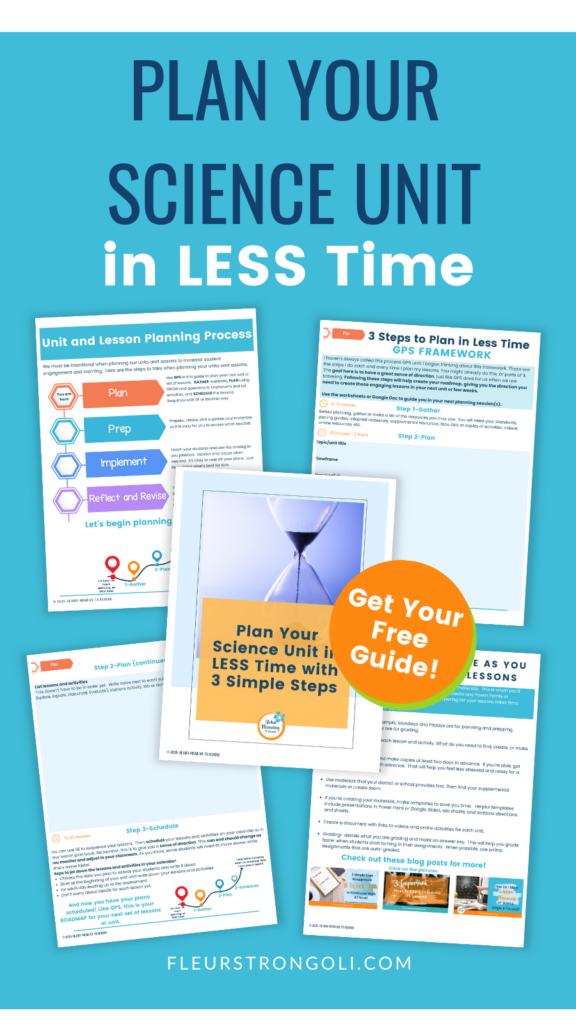
Before you start planning, be sure to grab your free guide! Plan Your Science Unit in LESS Time with 3 Simple Steps!
Science Station Ideas
In the blog posts, What Are Science Stations in the Classroom and What are More Classroom Station Ideas for Middle School Science, I gave different ideas for stations. My top 4 non-negotiables are a vocabulary station, sorting station, make a model station, and a computer station. I also like to incorporate a reading station and a math in science station. Other science station ideas include a writing station, experiment station, research station, and task cards station.
Planning for Science Stations
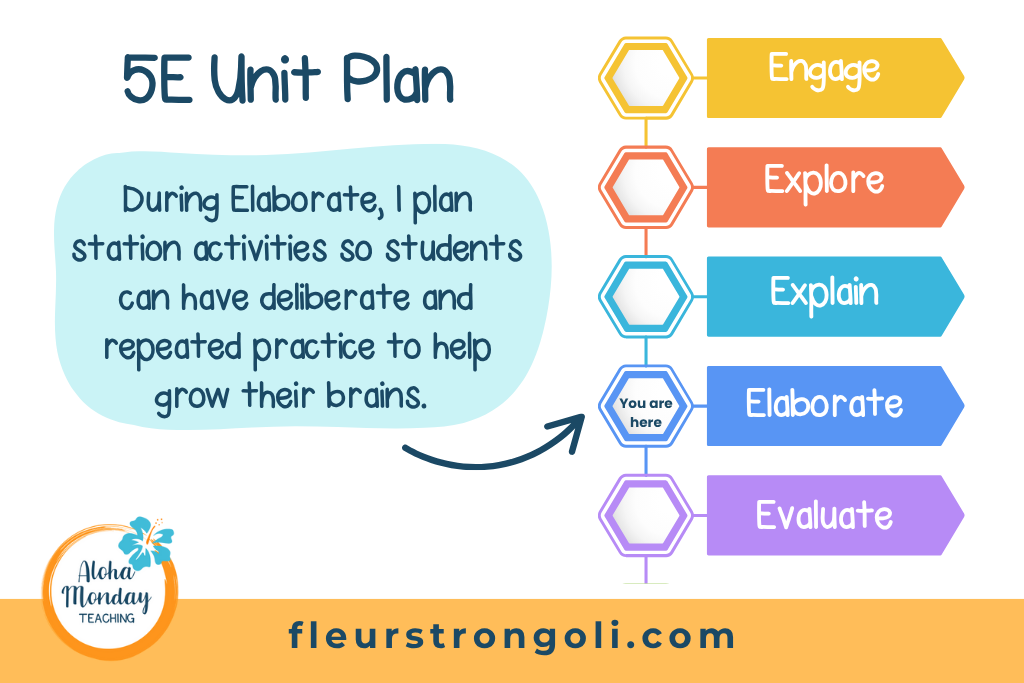
I like to use 5E to plan my science units. I use science stations during Explore and Elaborate. During Explore, I call them “Exploration Stations”. I’ll post a link to that blog when it is ready.
During Elaborate, I plan station activities so students can have deliberate and repeated practice to help grow their brains.
If you haven’t gotten your free guide- Plan Your Science Unit in LESS Time with 3 Simple Steps yet, be sure to download it. This is what I use when I plan my science units.
Choosing Station Activities
Once I’ve listed all the things my students can do, I choose assignments that can be completed during stations. And to be clear- on other days, students are doing different types of practice. This is just another type of assignment I give them that takes about 2-3 class periods.
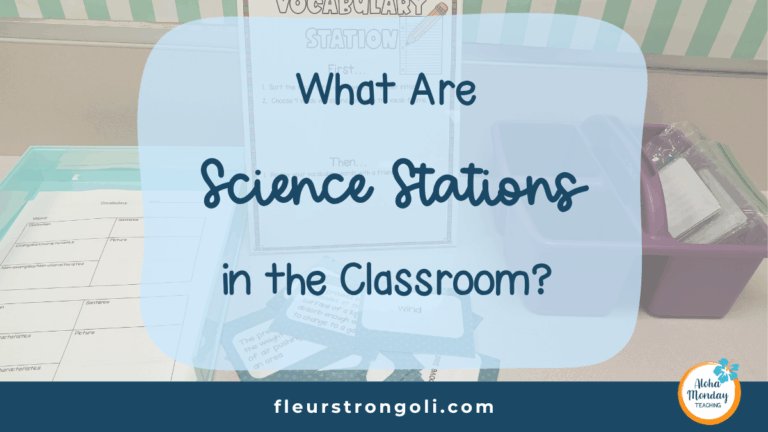
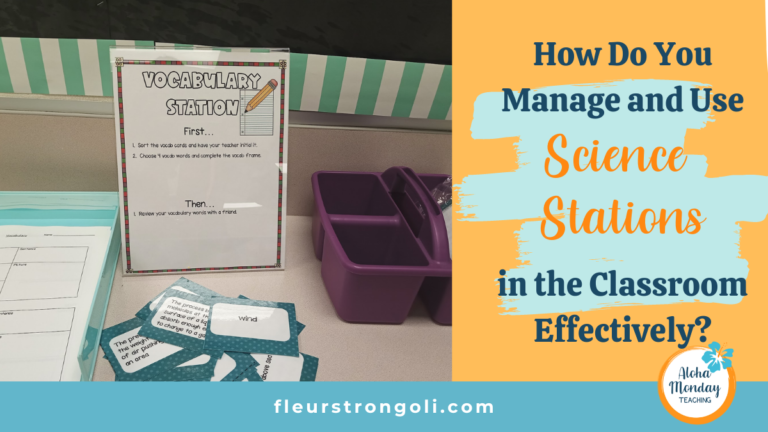
I always have a vocabulary station in which my students match vocabulary words and their definitions. They complete a vocabulary frame as part of this station. I will think of ways students can categorize information from this unit to place in a sorting station. And I will incorporate any models we will make during a unit and make that an assignment in my make a model station.
If there is a graphing opportunity or math practice, then I will make a math in science station. And I’ll likely add a reading station and a computer station to the mix, depending on time.
Planning Student Groups
This is also the time I plan my groups. To keep things simple, I usually keep students with their lab groups to rotate through stations. I have mixed it up though so kids can work with other people. I also like to group on mixed ability.
I have a rotation list that I post so students know where they should be working. I set a timer for 12 minutes (and add more if needed). I have found that 12 minutes is “just right”. If students don’t finish in 12 minutes, I either have catch up time at the very end of stations or post it online so they can work on it as homework.

I will allow some classes to work at their own pace. If that’s the case, there can only be four people maximum at any station.
While planning stations, I’ll also decide if I’m going to make myself a station to review with students or if I am going to monitor and help where needed.
Preparing Materials for Science Stations
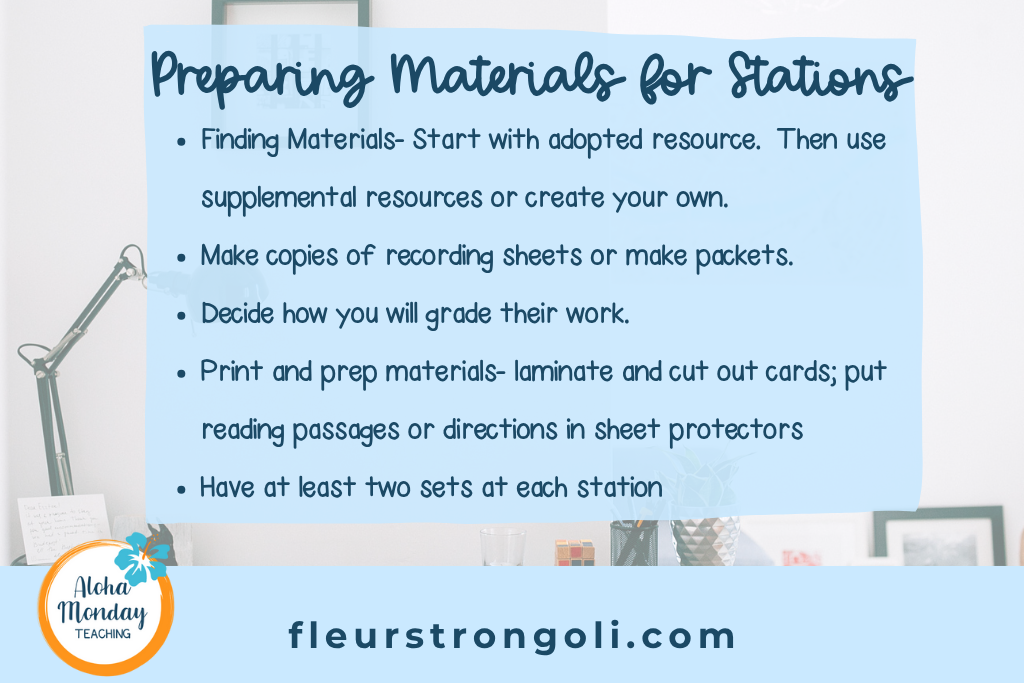
When preparing materials for stations or any of my lessons, I always use our adopted resource first. Then I will look at any supplemental materials I already have or ones I need to find online. I also like to make my own resources, which is time consuming but I love it. To save time, always use what you have and repurpose it.
You’ll want to decide how you’re going to have students write down their answers and how you will grade it. I like to make packets for stations so everything is in one place. It makes it easier to track and grade. I make my answer key ahead of time so I know what I’m looking for.
If I am planning ahead of time (at least 2 weeks), then I will order my copies through the print shop. If not, then I need to make time to make copies. For a reading station, I will make several copies of the passage and put them in sheet protectors. I don’t make a copy for every single student.
For sorting or matching cards, I print, laminate, and cut them out. This takes time, but once it’s done, you have it for years! So it is worth the time at the beginning.
For each station, I make at least two sets of materials so students can work with a partner or alone.
If a station requires other materials besides paper, I gather what’s needed and put it in a tub. I use IKEA Trofast tubs to hold my lab and station materials.
Here is a blog post to help find free resources online for a computer station or reading station.
How to Set up Stations in a Classroom
I recommend setting up your stations the day before you start. I like to make 2-3 copies of each station and set them up in different parts of the room. That way I can have smaller groups at each station. Put some of the stations to Google Classroom for students that need more time, are absent, or are struggling staying on task.
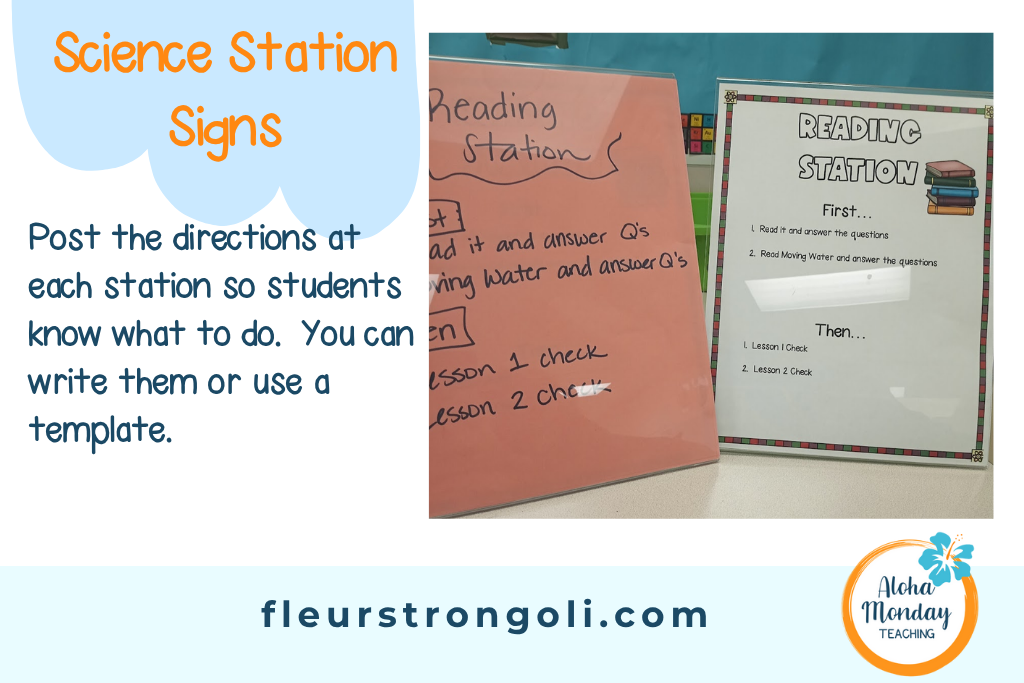
I print my directions using these editable station signs and put them in acrylic sign holders.
3 Ways to Set Up Stations
Here is an example of how I set up stations using a vocabulary, make a model, sorting, and computer station. I will also add myself as a station so I can work with small groups.
I have 9 lab stations around the room. When students are at the computer station, they are working at their desk. I will put a set of stations at lab stations 1-3; 4-6; and 7-9. Then I will assign groups of students to work only in those areas as they rotate. This keeps students in certain areas so there is less congestion and behaviors are easier to manage.
I post my rotation document on the screen so students know where they should be during each rotation.
Another way I’ve done this was by dividing my class in half, especially with larger classes. One half of the students will be at their desks on the computer station, while the other half are rotating through stations. Then I will switch it the next day.
Another way you can set it up is by having the vocabulary station on one side of the room, the make a model station on another side of the room, and the sorting station at a different side of the room.
You will find what works best for you in your classroom. And it gets easier as you do this more.
For more about managing stations in the classroom, check out this blog post.
Managing your Classroom During Station Rotations
When you first start stations in your classroom, or if you need to make adjustments, always start with teaching the routines and procedures. If you decide you want your students to rotate at their own pace, I recommend teaching them using a timer first. That way they know the expectations and will be able to manage their time on a future set of stations.
At this point, you’ve set up your stations around the room and you have your groups ready. Post a chart or some kind of rotation visual so students know where they are supposed to work. Routines they need to know are what to do at each station, how to clean up their station, and how to rotate to the next station.

The expectation during each station is to complete the assignment within the time limit (or give them extra time later), stay with their group, and work on task. Each student should contribute to the activity if it is a partner or small group activity like sorting or matching. Students must know that this practice is for them and they need to do their own work.
If students are not following the expectations, you could have them work alone at their desk. This is when it is handy to have some of your stations online so they can use a computer or to have an extra set handy so they can work alone.
Read more about managing stations in this blog post.
Wrap Up
We talked about different types of stations and how to plan for them when you are doing your science unit planning. I shared ideas on preparing for stations and where to find materials. And I shared how to set up stations in a classroom with some examples. I shared some quick ways to manage your classroom from teaching routines to enforcing expectations.
Your Turn
What are some challenges you face when planning, preparing, or setting up stations? What about managing stations? Check out the blog posts below about managing stations and other routines during independent work.
And if you are looking for stations that are done for you, be sure to check out the Cells Activities Stations Bundle and the Rocks and Minerals Stations Bundle. I will add more to my store as I put them all together. I have more resources in my TpT store that lend to different stations. The links to each category is below.
Read More
What Are Science Stations in the Classroom?
What Are More Classroom Station Ideas for Middle School Science?
How Do You Manage and Use Science Stations in the Classroom Effectively?
5 Independent Work Ideas and the Routines Students Need to Know
The Science Teacher List of Free Resources for Teachers
Links
Plan Your Science Unit in LESS Time with 3 Simple Steps!
Cells Activities Stations Bundle
Rocks and Minerals Stations Bundle
Editable Stations Signs (to post directions at each station)
Color by Number Activities (great for a review type of station)
Vocabulary Activities (for a vocabulary stations)
Task Cards (for a task card station)
Acrylic sign holders (this is what I use to hold my station directions)
Scotch Laminator and Laminating Pouches (this is what I use in my classroom)
Sheet Protectors (I use these for task cards and reading passages)