5 Cells Activities to Use in Stations to Help Students Practice What They’ve Learned
If you teach cells, I highly recommend you incorporate these cells activities into your unit! I love teaching cells! Over the years, I have found different ways to give my students the practice they need. In addition to labs, looking through microscopes, and completing projects, I have my students use these cells activities during stations.
In this post
We’ll start with an overview of science stations in the classroom. I’ll talk about some teacher tips when it comes to preparing stations. And I’ll share five cells activities to engage your students in deliberate and repeated practice. These will be completed after you’ve taught them about cells. I’ll also give you more ideas for stations or activities to use during your cell unit.
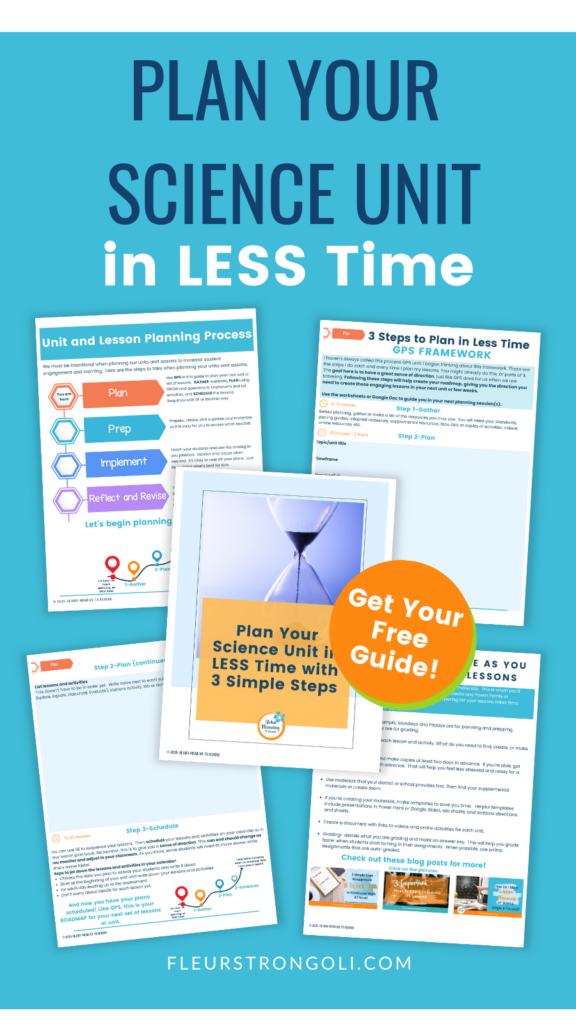
Before you start planning, be sure to grab your free guide- Plan Your Science Unit in LESS Time with 3 Simple Steps!
Disclosure: This post may contain some affiliate links for your convenience. As an Amazon Associate I earn from qualifying purchases with no cost to you.
NGSS Standards Addressed
The Cells Activities Stations Bundle supports the NGSS standards:
MS-LS1-2 Develop and use a model to describe the function of a cell as a whole and ways the parts of cells contribute to the function.
MS-LS1-1 (Includes some review of cell theory) Conduct an investigation to provide evidence that living things are made of cells; either one cell or many different numbers and types of cells.

Science Stations Overview
During 5E Elaborate, my students spend about 2-3 class periods working through various stations. I typically have a vocabulary station, make a model station, and a sorting station. Other stations I like to have are a computer station, math in science station, and a reading station. Here is how I use the Cells Activities Stations Bundle in stations in my classroom.
You can read more about stations in these blog posts:
What are Science Stations in the Classroom?
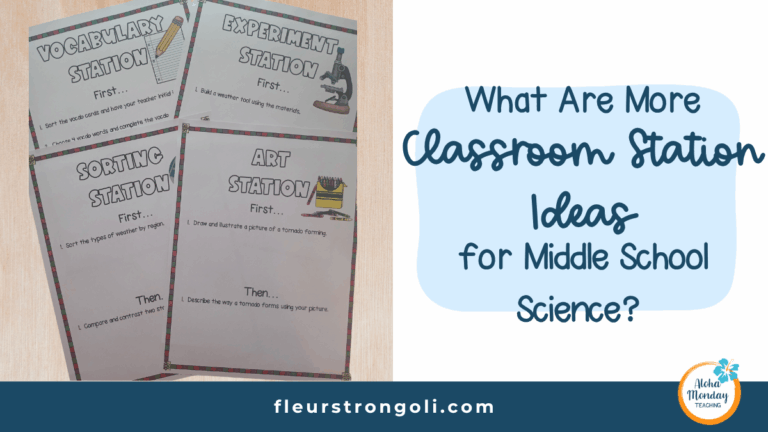
What are More Classroom Station Ideas for Middle School Science?
Are You Wondering How to Set Up Stations in the Classroom?
How Do You Manage Stations and Use Science Stations in the Classroom Effectively?
Tips for Teachers when Using Cells Activities Stations
This Cells Activities Stations Bundle requires some prep and planning. I’ve included a lesson plan, directions for each station, and suggestions for other station ideas. I will include specific prep instructions in this blog post. To post directions at each station, you can use these editable station signs. I print them and put them in acrylic sign holders at the station.
For now, decide which activities you are going to use in stations. You can use some as an independent assignment.
Next, choose if you’re going to have students complete the answer sheets at each station. Decide how you’ll collect it or if you’ll make a packet that they hold on to until the end. I’ve done both, but I find it easier to make a packet. That way the papers stay together and I can grade it easier. You can either use the editable recording sheets in the stations bundle file, or print out each individual resource’s recording sheet.
You’ll also want to decide how you will grade their work. I like to check their work as they are working. For example, during the sorting or vocabulary stations, I will check their cards and initial their papers. That way when I grade, I can see that I’ve already checked their work and give them points. For the other stations, I check for accuracy. Make your answer key ahead of time.
Task Card Station
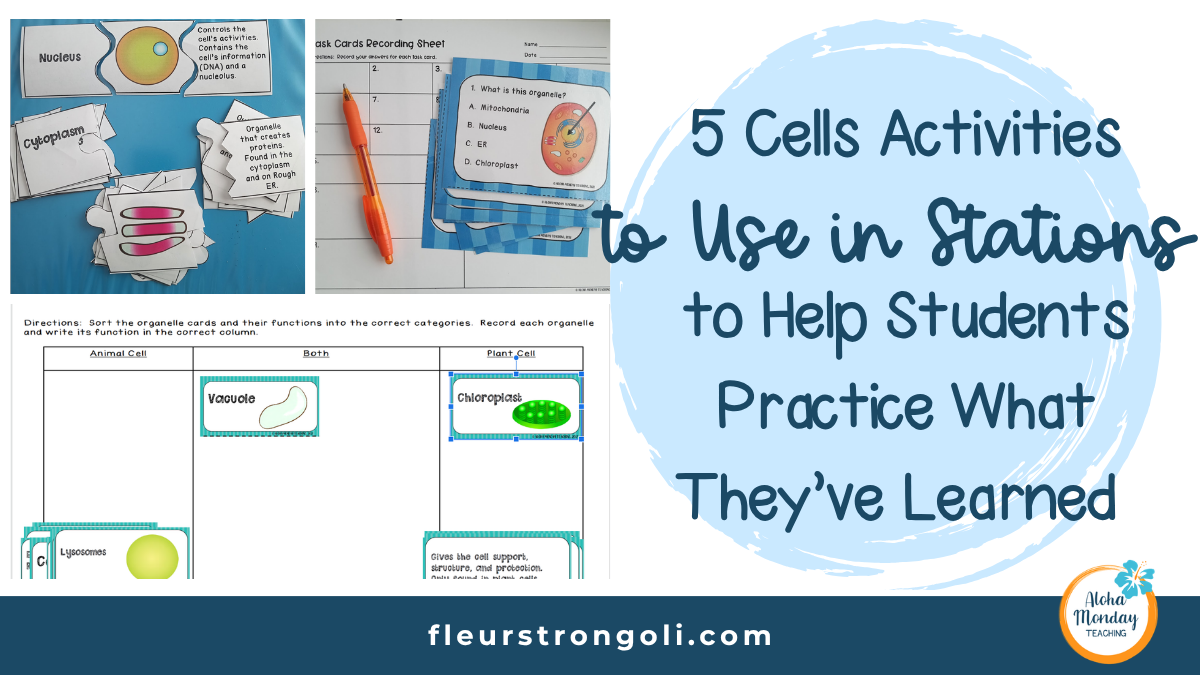
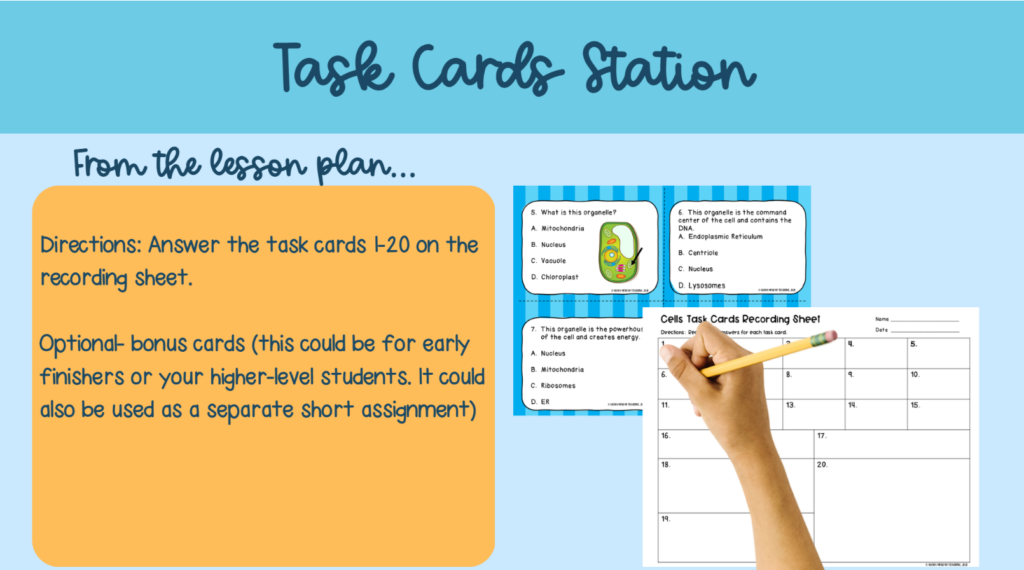
This bundle comes with Cells Task Cards. There are twenty task cards and four bonus cards. I’ve included questions about the cell theory, structure and function of organelles, and comparing animal and plant cells. The bonus cards are more for an extension. You can include it in your task card station or you can assign it separately. I’ve also included a recording sheet that you can copy for your students.
Teacher Prep
To prepare this station, you need to make copies of the task cards. You can put them in a sheet protector. You can laminate and cut them out and put them into baggies. This station can also be added as a file in Google Classroom or other secured platform.
You can read about more ways to use task cards in this blog post.
Sorting Station
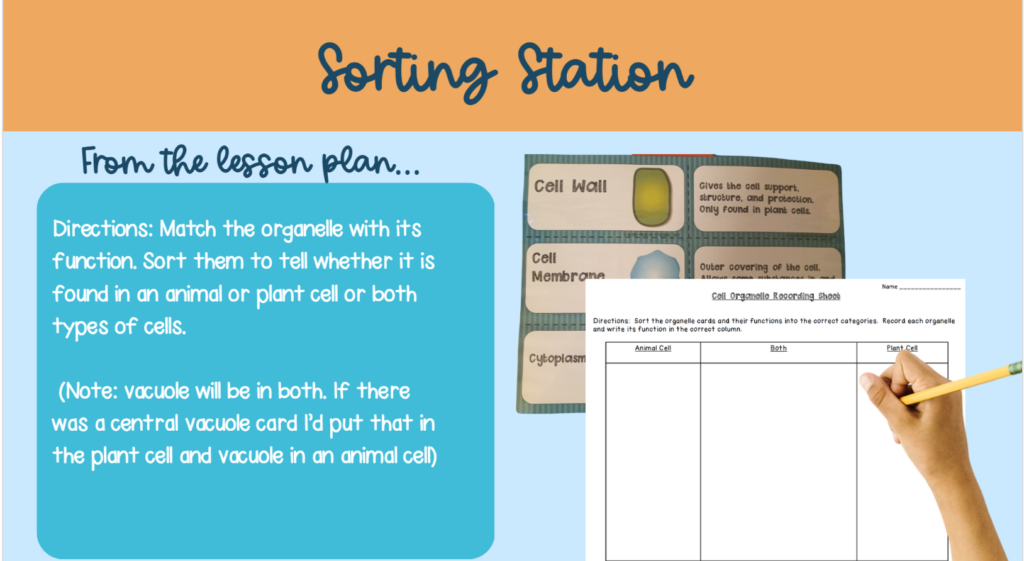
In this sorting station, students will sort organelles into different categories. They have to decide if the organelle or structure is in an animal cell, plant cell, or both types of cells. Then they record it on their answer sheet.
Teacher Prep
To prepare this station, you need to make copies of the cards. You can laminate and cut them out and put them into baggies. You can also print on cardstock if you can’t laminate.
Reading Station
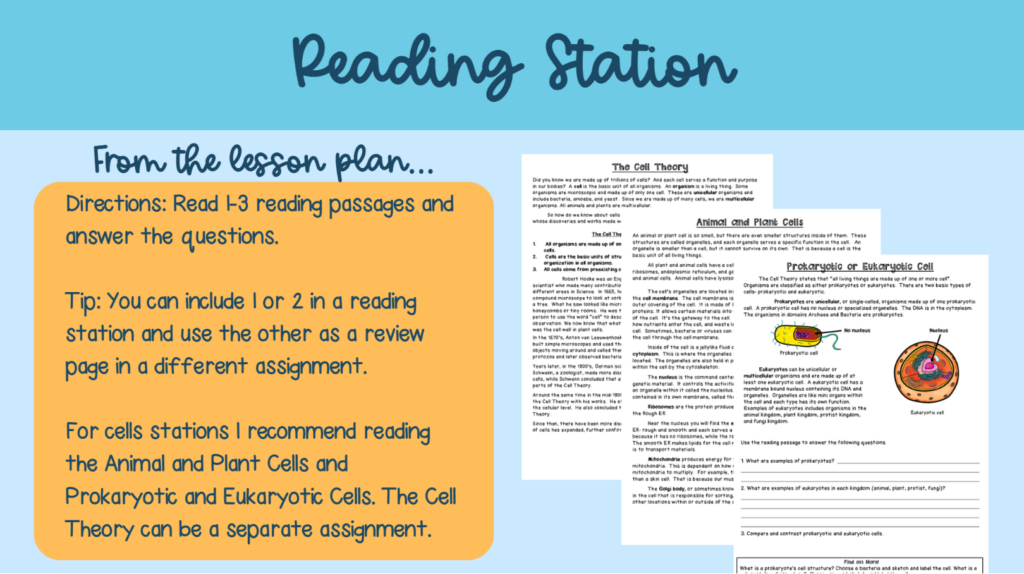
There are three different reading passages you can use in a reading station. I recommend at least one reading passage, depending on its length. For this set of stations, I would use either the Cell Theory or the Animal and Plant Cells reading passage. You can always assign reading passages as an independent assignment.
In this station, students will read the passage and answer questions. There are two sets of questions, one for grade level and one for advanced students. They can record their answers on the provided answer sheet, in their notebooks, or you can use the editable recording sheets in this bundle.
Teacher Prep
To prepare this station, you need to make copies of the reading passages. I like to make 2-4 copies for each station and put them into sheet protectors. That way it can be reused and I’m not making copies for every single student. You can also add the reading passages and questions in Google Classroom or your secured classroom platform.
Vocabulary Station
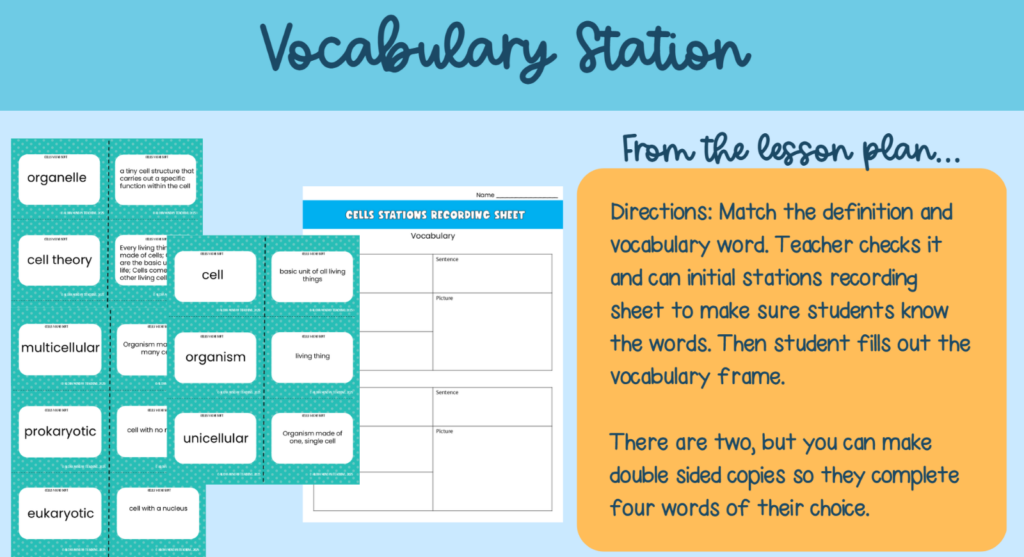
For this station, you have some options on what to use. You can have students match the cell organelle puzzles. You can also have them match the vocabulary cards and complete a vocabulary frame. Both activities would be great practice in a vocabulary station.
When students are at this station, I like to check their work before they complete a vocabulary frame. First I check their cards to make sure they’ve matched them correctly. Then I initial their paper. This way I can help students who still struggle with vocabulary words.
Here are other ways to practice vocabulary in your classroom.
Teacher Prep
To prepare this station, you need to make copies of the vocabulary cards. If you use the puzzle cards, you’ll want to laminate them. This will take a little longer to prep because you have to cut each of them out with scissors. For the matching cards (rectangular), you can use a paper cutter to cut them out faster.
Make a Model Station
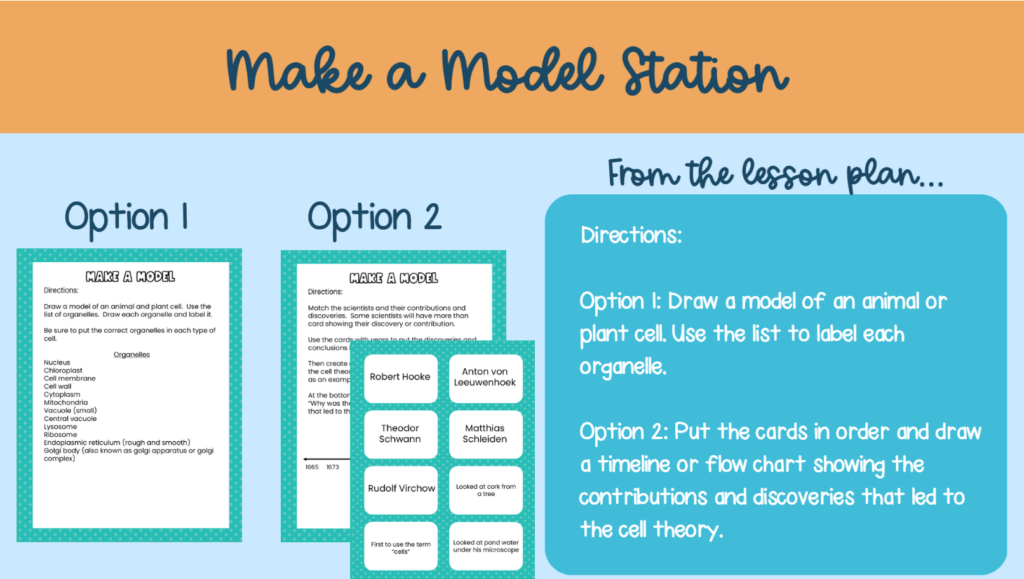
I incorporated a make a model station to support the SEP Making Models. There are two options at this station. You can either assign one or both, or have students choose one to complete.
The first option is to have students draw models of an animal and a plant cell. They are given a list of organelles and structures to include in their model.
The second option is about the cell theory. They’ll put cards in order first. Then they will create a timeline about the development of the cell theory.
Teacher Prep
To prepare this station, you need to decide which option(s) you will use. First, make copies of the directions. Then post it at the station. Or you can post these instructions online (Google Classroom or secured classroom platform). If you’re using the cards, you’ll need to cut them out and put them into baggies or envelopes.
Other Science Stations Ideas
In the lesson plan, I give some ideas and suggestions for other stations.
Writing Station
You can include a CER (Claim, Evidence, Reasoning) assignment to a writing station. You can ask them, “What are the main differences between an animal and a plant cell?”
Research Station
Students can learn more about the scientists involved with the development of the cell theory. They can choose a scientist (Hooke, Leeuwenhoek, Schwann, Schleiden, Virchow). They will learn more about their work and contribution to the cell theory and science.
Computer Station
There are several different things you can do in a computer station. If your curriculum resource that your district or school uses has an online resource, then I would start there. For example, your resource may have online interactivities that students can complete. You can watch videos as a class and assign the quiz. Brain Pop is great too. But if you don’t have access to Brain Pop, you can use Scholastic Study Jams or YouTube videos.
There are also websites that have interactive activities to make models of cells. These are all linked in the lesson plan.
Links can be added to Google Classroom or your classroom platform so students can easily access the materials.
Other Activities
Color by number activities are a great way for students to review. Here is an Animal and Plant Cell Structure and Function Color By Number. It can be used in a station, as homework or independent work, or for sub plans.
Wrap Up
I shared five cells activities to use in stations during your cells unit. I gave some ideas on other stations. I also talked about an overview of stations and some tips for you as your prepare these stations. These are all in the Cell Activities Stations Bundle.
Your Turn
What are some activities you give your students to practice what they’ve learned about cells? What is something new you will try?
Read More
How Do You Manage and Use Science Stations in the Classroom Effectively?
5 Engaging and Easy Tips on How to Use Task Cards
5 Engaging and Simple Ways to Practice Vocabulary About Science
5 Independent Work Ideas and the Routines Students Need to Know
Links
Cells Activities Stations Bundle
Animal and Plant Cell Structure and Function Color by Number
Editable Stations Signs (to post directions at each station)
Acrylic sign holders (this is what I use to hold my station directions)
Scotch Laminator and Laminating Pouches (this is what I use in my classroom)
Sheet Protectors (I use these for task cards and reading passages)
*As an Amazon affiliate, I earn commissions at no cost to you.