5 Ways for Science Teachers to Differentiate in Classroom
We have students in our classes with different needs, so how do we differentiate in classroom? For Science teachers, we can do several things to make sure we are meeting the needs of all learners- low to high and in between. Let’s talk about five ways we can differentiate in classroom.
In this Post
We will talk about what differentiation is. Then I’ll share five ways we can differentiate. We’ll discuss the assignments and materials we use, projects, choice boards, stations, and using small groups as ways to differentiate in classroom.
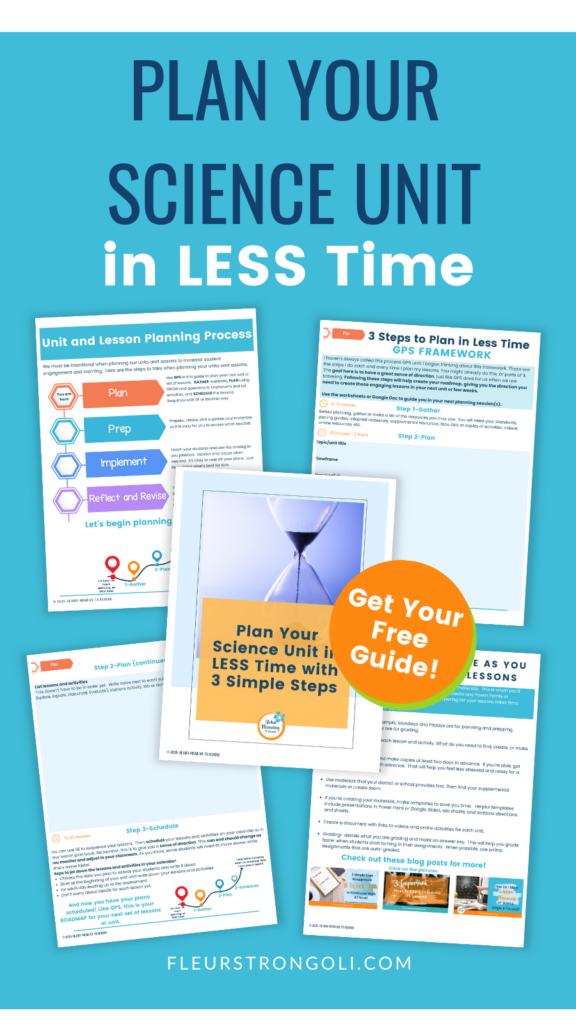
Get your free guide to plan your lessons or science units in 3 simple steps! Plan Your Science Unit in LESS Time with 3 Simple Steps!
What is differentiation?
When we adjust our instructional strategies, the process through which students access content, or create different ways for students to show us what they learned, then we are using differentiation strategies. These strategies should be intentional and meant to reach all learners. We can differentiate in many ways to reach our lower level students, higher level students, and all those in between. In fact, using differentiation is helpful for all students because a particular strategy or option might be what they need to access or excel in the content you are teaching. When we use scaffolding questions, we are differentiating. When we have students talk with their partner or group members before coming up with their own answer, we are differentiating. These are just a couple of examples of instructional strategies.
We’ll go over five ways we can differentiate in our science classrooms. I’ll go over modifying materials and assignments, using choice boards, using projects, science stations, and pulling small groups.
Modify Materials and Assignments
We usually think of modifying materials or assignments as an IEP accommodation, because that’s where we tend to read those. But this can be done for all students. When we modify materials or assignments, we are differentiating our instruction strategies and the processes that students are using to access the curriculum.
Modified Notes
We can give students closed notes or a copy of completed notes. With closed notes, they can fill in the blanks. With a completed set of notes, they can highlight information rather than write it down. This will give kids the ability to process the information. Just remember to give them to write when you’re not giving information. Some of their brains aren’t ready for listening and writing notes at the same time.
Graphic Organizers and Thinking Maps
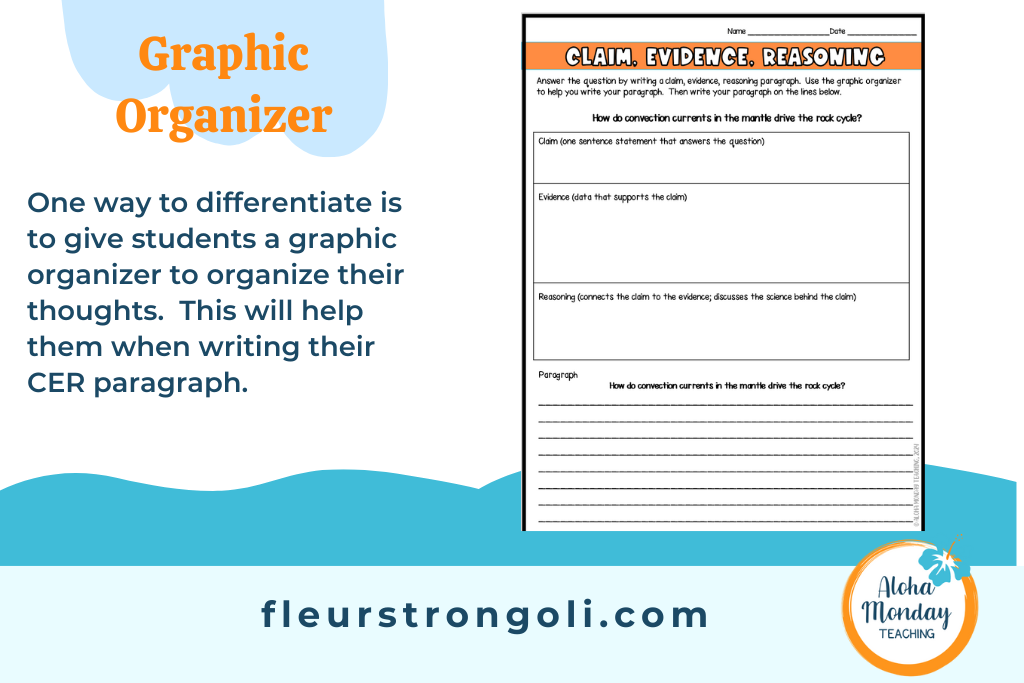
You can give students graphic organizers to organize information before they write about it or complete an assignment. For example, when having students write a CER paragraph, you can have three boxes so each is a section for C-E-R. In each box, give directions of what to write to answer the question. Then they use their graphic organizer to write the paragraph. You can also give them graphic organizers to classify information like a tree diagram or map, compare and contrast with a Venn diagram or double bubble map, or brainstorm characteristics with a bubble diagram or map. They can sequence with a flow chart or map before writing.
Assignments
The amount of problems assigned is another way to differentiate. You can give a student half the assignment or have them complete certain questions. You can also extend the assignment by having students justify their answers or reasoning. Other assignments that are great for differentiation are choice boards, projects, and stations.
Choice Boards
Choice boards are a list, menu, or board of assignments that students can choose to complete. To create these, jot down some activities you’d like your students to complete. I like to think of this as an extension, so I put some creative assignments on a choice board as well as practice or review assignments.
Once you have your list, you can decide how many choices they need to make and what time frame they have to complete it. This is differentiation because of the choice aspect. When you include a variety of activities or products, it will get different parts of the students’ brains involved as well as their learning preference. For example, I like to have a nonfiction writing assignment such as a news article or documentary. I’ll also have a creative writing assignment like a story or a comic. And I have choices where students make a concept poster or a review game. These are all different activities and students can choose based on their strengths. It also gets kids thinking of the concepts in different ways.
I have a blog post about choice boards that you can check out for more.

Project
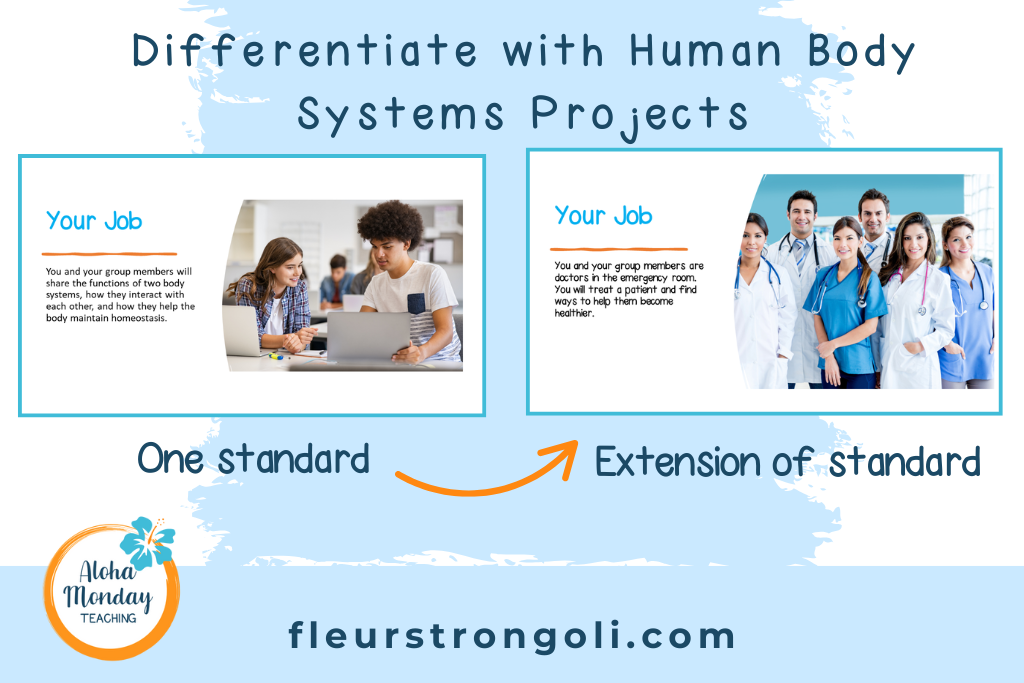
You can differentiate with projects by changing the requirements of the project or the product that students are creating. For both types, the standard is the same. It’s a great way to differentiate for your higher level students- create an extension to the standard. Here are two examples.
In this human body systems project bundle, the standard is to describe how body systems interact with one another. The requirements of each project are different. In one project, they are researching and creating a product about two body systems. In the second project, they are researching how a specific health condition affects the body systems. It’s an extension of the science standard.
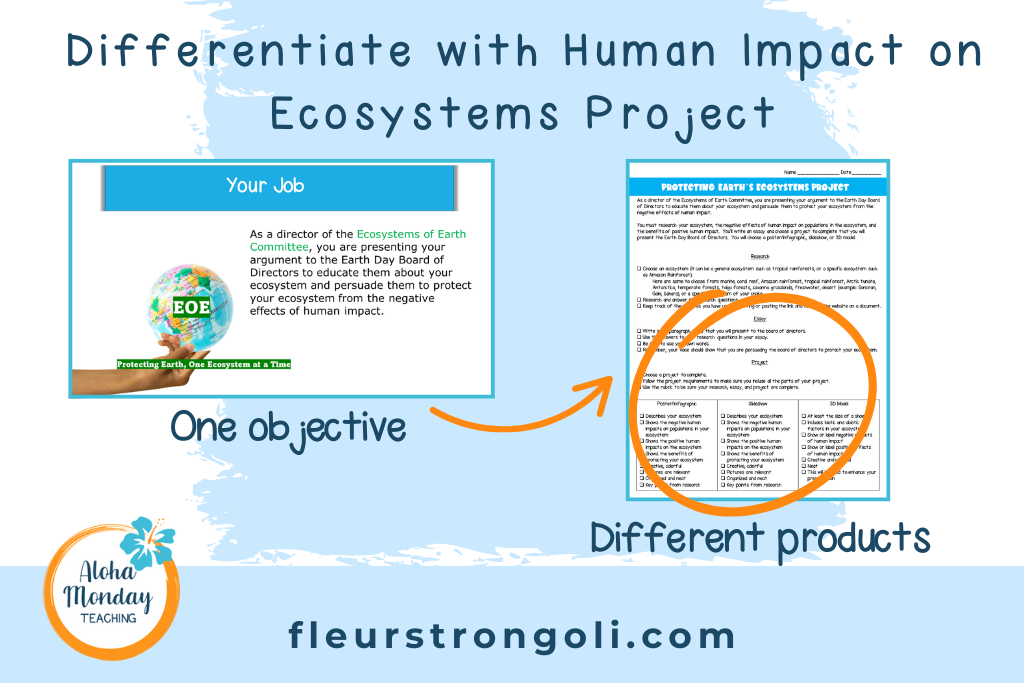
In this human impact on ecosystems project, the research requirements are the same, but the products are different. There are two options- choose a product and choose a product and write an essay. The products they can choose are poster/infographic, slideshow, or a 3D model.
Here is a link to the projects in my TpT store.
Science Stations
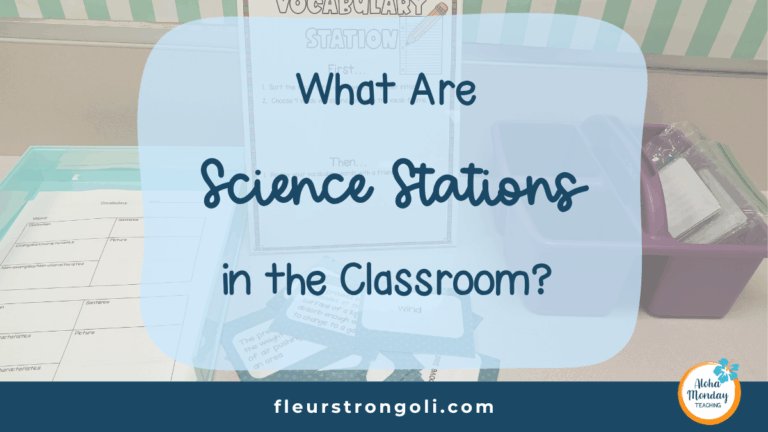
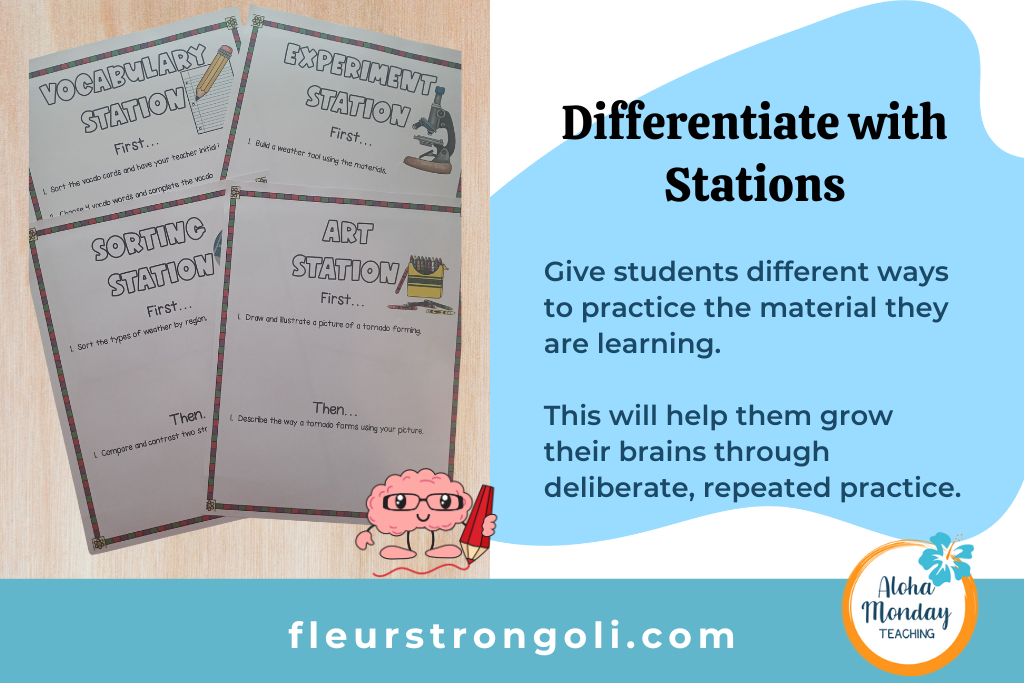
Science stations are a great way to differentiate. There are some similarities to a choice board. In fact, you can use the same activities if you wanted to. The difference is, the stations you choose to have students complete are all required. I personally like to use science stations as a way to give students deliberate, repeated practice. This will help them learn the material and move it to long term memory.
Some examples of stations might include a vocabulary station, sorting station, and a make a model station. These are all different types of activities that students are completing. You can differentiate within stations too. You can modify it so some students work with a set of vocabulary while another group has an extension of vocabulary words or an alternate activity. For a sorting station, you could have a group sort concepts and another group write about it.
Here is a blog post about managing science stations in the classroom. I will update this once I have the other blog posts about stations written.
Small Groups
Working with small groups is another great way to differentiate. This goes with our instructional strategies. Finding the time and preparing small group work is something that needs to be planned. I usually work with a small group during independent work time or during stations. I will set myself as a rotation and work with all of my students over a two or three day period. If I am pulling small groups during independent time, I will either have them sign up to work with me or just call on students.
When I do this, it isn’t always random. Sometimes it is- I just go down my class list and call kids to work with me. Other times, I have a list of students I want to check in with. I use exit tickets and what I notice during class when these students are working. These are the students that might be struggling, are answering questions partially correct, or are those who need extra support.
When I work with them, I give them a dry erase pocket (or whiteboard) so they can respond to my questions. I will pull questions from our unit, review the study guide, or review the exit ticket and concepts that they are struggling with.
Wrap Up
We talked about what differentiation is and how we can differentiate our instructional strategies, processes, or products. We discussed the assignments and materials we use, projects, choice boards, stations, and using small groups as ways to differentiate in classroom.
Your Turn
What are some ways you are intentional with differentiating for your students?
Read More
How Do I Use Choice Boards in the Classroom So They Are Effective?
How Do You Manage and Use Science Stations in the Classroom Effectively?
Resources You Might Like
Plan Your Science Unit in LESS Time with 3 Simple Steps! (free guide)