
What Are Science Stations in the Classroom?
Using science stations in the classroom is one of my most favorite ways to give students the deliberate, repeated practice they need to learn the material. Stations can be done during 5E Explore or Elaborate. Today, I’m going to share all about stations in the classroom after students have been taught the material- so this will be during 5E Elaborate.
In this Post
I’ll explain what stations in the classroom are and why to use them. I’ll talk about the four main types of stations that I use and you might use during your science units. When I go over each station, I will give quick tips and suggestions for preparing and grading stations.
Before you start planning, be sure to grab your free guide! Plan Your Science Unit in LESS Time with 3 Simple Steps!
Why Use Science Stations?
Before I answer that question, let’s talk about 5E for a moment. If you haven’t use 5E to plan your units, I highly suggest it. It’s a great way to start getting your students even more engaged, exploring, and thinking about science. Let’s go over two types of stations in the classroom and why it helps our students’ brains learn.
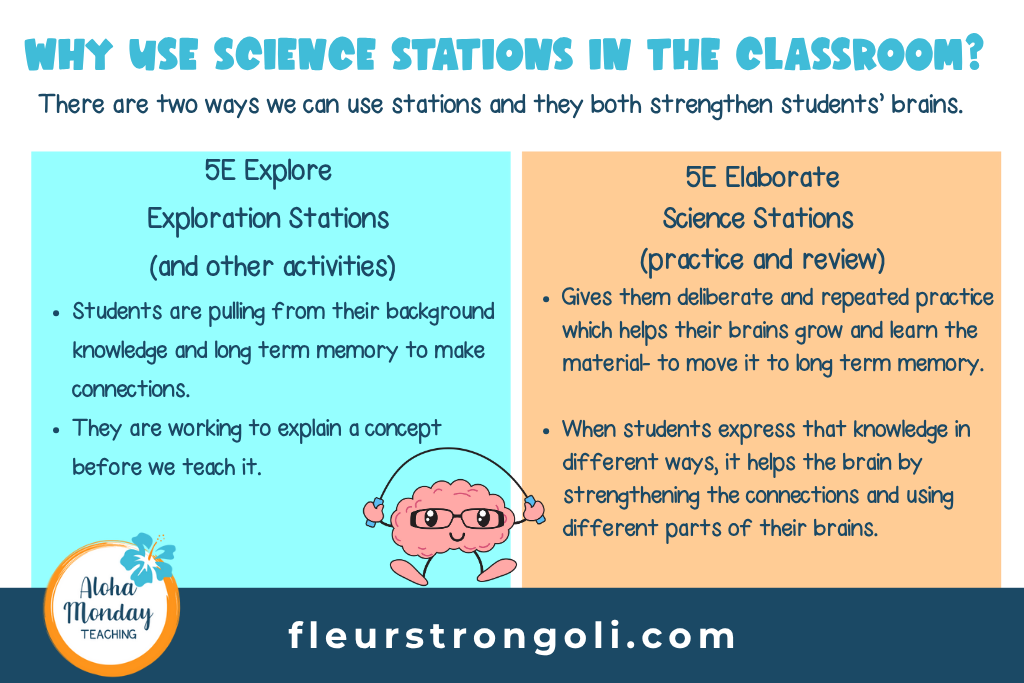
There are two types of stations I use in my classroom. One is during Explore, which I like to call Exploration Stations. During Explore, students are pulling from their background knowledge and long term memory to make connections. They are working to explain a concept before we teach it. I will link to a blog post when it is ready.
The science stations in this blog post takes place during Elaborate. So, after I have taught the material to my students, one of their independent assignments includes science stations. Elaborate, to me, is the perfect time to give students deliberate and repeated practice. This is necessary for students’ brains to grow and learn the material- to move it to long term memory. Elaborate is also the time to have students transfer and express that knowledge in different ways. That also helps the brain by strengthening the connections and allowing students to create or explain using different parts of their brains.
What Are Science Stations?
Now that we’ve gone over why we should use them, let’s talk about what they are. During independent or group work time, students are given assignments like worksheets, labs, or projects. Science stations allow for a variety of activities to be completed over 2-3 class periods. This gives students different ways to work with and practice the material that they have learned. They are able to work alone or with a small group, leading to conversations about the concepts. When students work collaboratively, dopamine is released in their brains. This gives their brains more incentive to work through the material with the result of learning.
What Types of Stations Do We Use?
There are many different types of science stations we can use in our classrooms. We just have to decide which ones are most beneficial in that unit for our students. I will describe four stations you can use. These are the four I always like to have. They are a vocabulary station, make a model station, a sorting station, and a computer station.
If you’re ready for more science stations, be sure to read this blog post. I don’t want to overwhelm you if you are just getting started with this.
Preparing stations can be time consuming the first time around. But once you have the materials made, you have it for the next several years. It’s worth the time it takes to prepare your stations.
Vocabulary Station
Vocabulary is very important in Science class and should be practiced as often as possible. Students should be exposed to it in different contexts if possible and given a variety of ways to work with the words. This will deepen their understanding of the content and move it to long term memory.
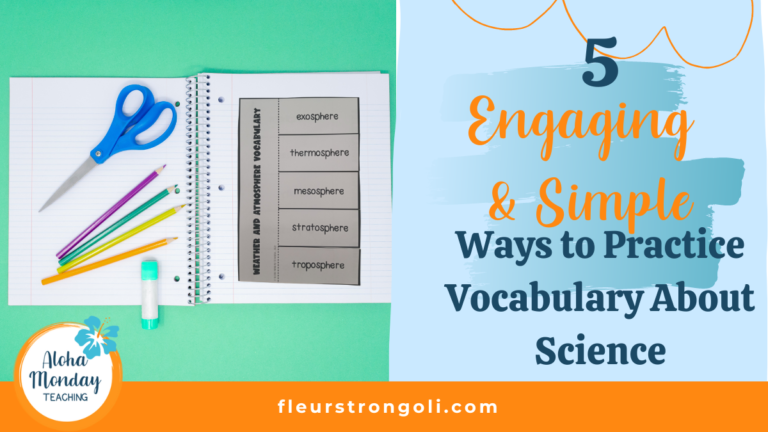
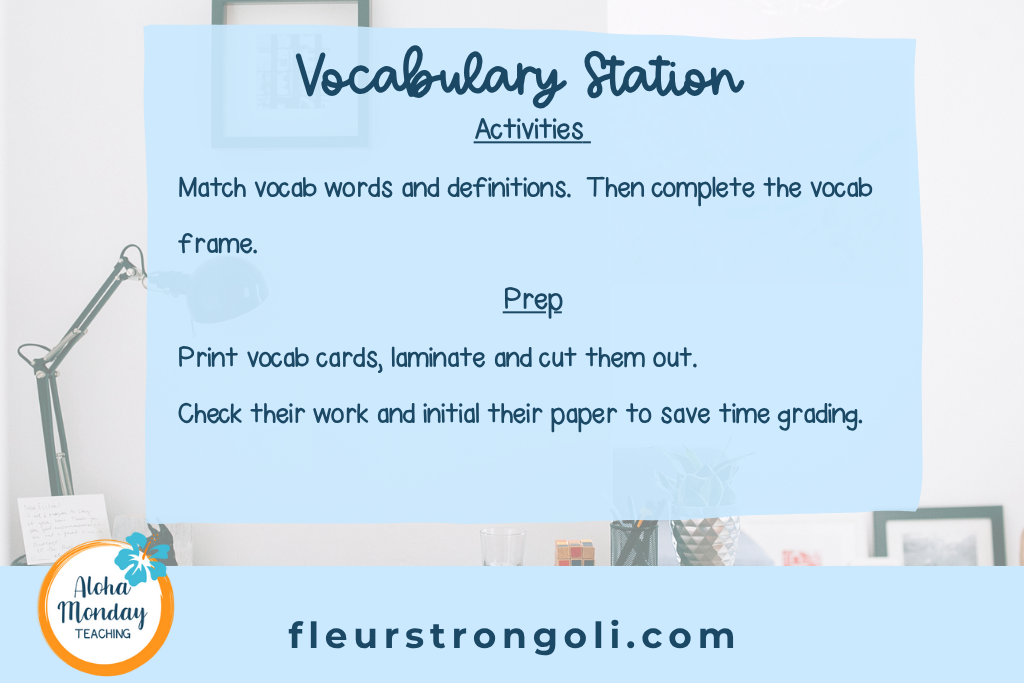
To keep it simple, I have matching cards in my vocabulary station and a vocab frame they complete. The vocab frame is based on the Frayer model. Students match the word and the definition. Then they choose 2-4 words and complete the vocab frame. You can also have vocabulary games or worksheets at this station.
To prepare for this station, print vocab cards for your students. I laminate my cards and then cut them out. That way I can use them for years to come. When they match them, I check their work and initial their paper. That way, when I grade, I know that I’ve already checked it.
Make a Model Station
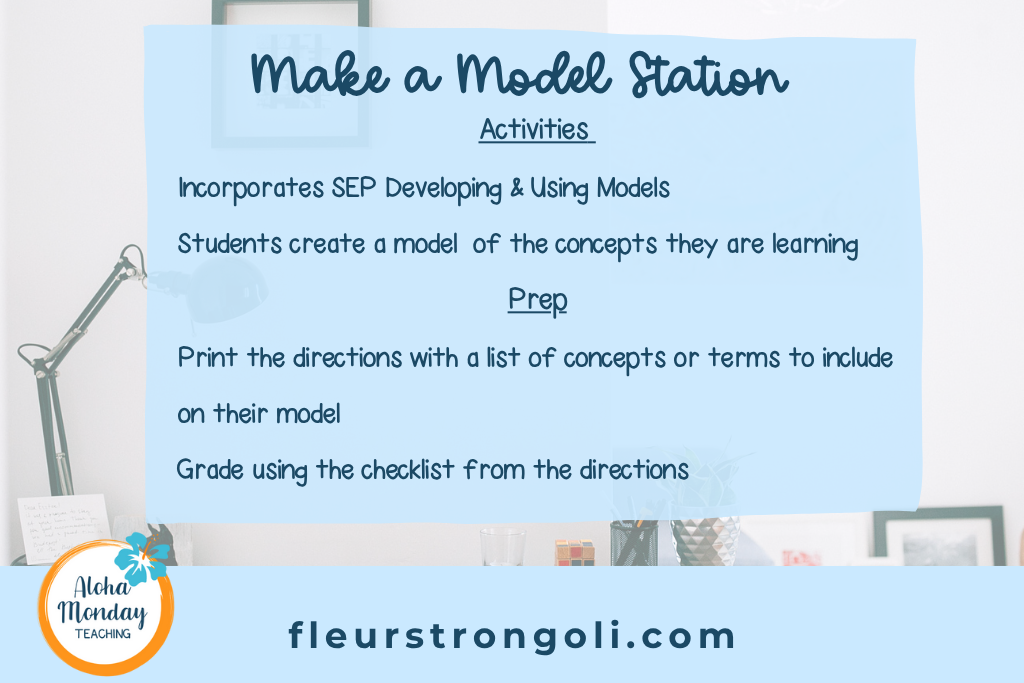
I love the make a model station because it incorporates the SEP (Science & Engineering Practice) Developing and Using Models. In the Make a Model station, I post directions on what model to make and a list of criteria they need in their model. For example, when making a water cycle model, students have to draw a picture, show the different processes in the water cycle with arrows, describe what happens during that state change, and show the energy source (sun).
This one is simple to prepare. You just need to type the directions and print it. To grade, I use the checklist and each part is usually one point.
Sorting Station
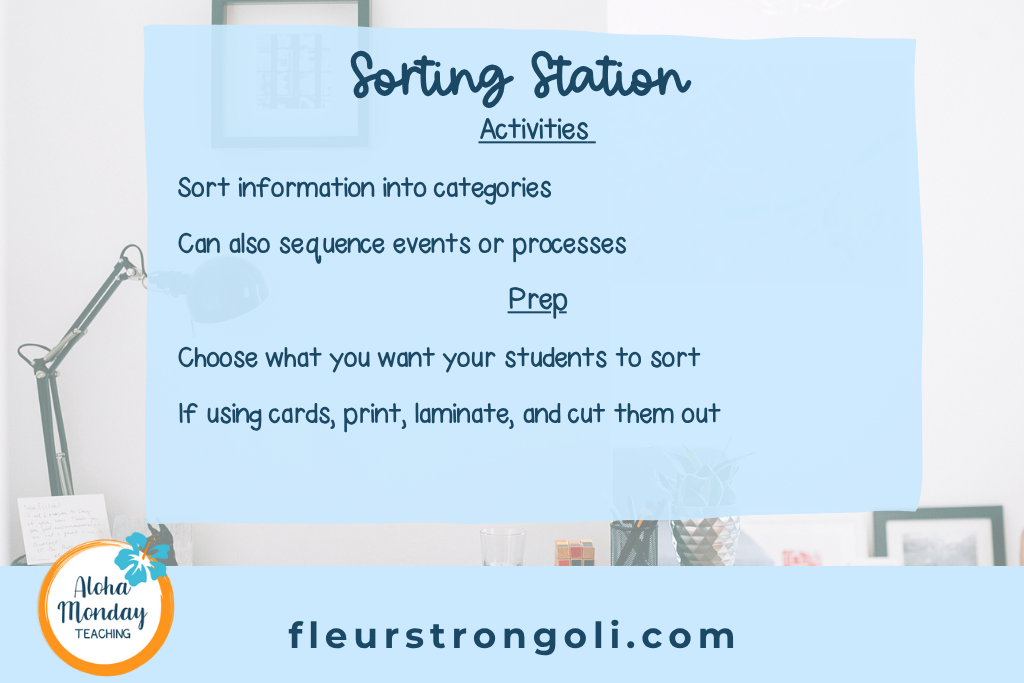
The sorting station gives students practice in categorizing information. This is helpful for their brains to organize the concepts so it is filed away easier in their memory. I have cards that they sort into categories and a recording sheet to write down their answers. You can sort almost anything- biotic and abiotic factors; types of rocks mineral, rock, or both; states of matter; living or nonliving, and more. Students also sequence events or processes in this station.
To prepare for this station, you’ll need to choose categories you want your students to sort information. Make the cards and print them out. They can record their answers in their notebooks, on a sheet of paper, or you can make a recording sheet for them. To grade, I will check their sorts and initial their paper. Then I check for each description when I grade their paper.
Computer Station
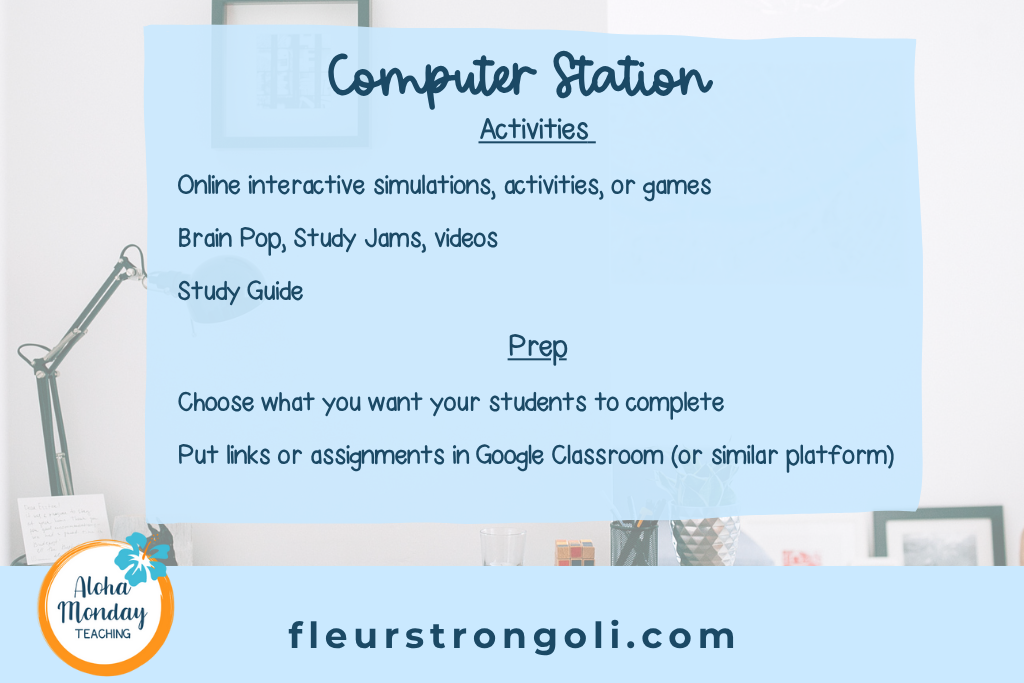
There are many things students can do on the computer for this station. I usually assign a Brain Pop and an interactivity from our curriculum resource. You can also assign videos, Study Jams, and online interactive simulations or games. I also like to add the study guide to my computer station.
To prepare for this station, choose what they will complete. Put the assignments and links in Google Classroom or a similar platform so students can access it.
Wrap Up
We talked about why we should use science stations in the classroom and what they are. I gave four examples of stations you can add to your classroom. And I also gave quick preparation and grading tips.
Your Turn
Do you use science stations in the classroom? If so, what stations do you use? What will you try? If not, what do you want to try out or what is holding you back?
Read More
What Are More Classroom Stations Ideas for Middle School Science?
How Do You Manage and Use Science Stations in the Classroom Effectively?
5 Engaging and Simple Ways to Practice Vocabulary About Science
5 Independent Work Ideas and the Routines Students Need to Know
The Science Teacher List of Free Resources for Teachers
Links
Plan Your Science Unit in LESS Time with 3 Simple Steps!
Cells Activities Stations Bundle
Rocks and Minerals Stations Bundle
Editable Stations Signs (to post directions at each station)
Acrylic sign holders (this is what I use to hold my station directions)
Scotch Laminator and Laminating Pouches (this is what I use in my classroom)
Sheet Protectors (I use these for task cards and reading passages)